

A beginner's guide to therapy modalities (Part 2)
What they are and how they differ
This is the second part of my “beginner’s guide to therapy modalities.” Part 1 discussed foundational approaches like psychoanalysis as well as cognitive and behavioral approaches like CBT, ACT, and DBT.
This week, I’m doing a quick overview of what I’m calling trauma-informed and body-based approaches. These are loose, unofficial terms, but they are meant to capture several modalities that deviate from psychoanalysis and a focus on CBT. Many are relatively new and challenge core principles or assumptions of traditional talk therapy.

Trauma-Informed & Body-Based Approaches
After CBT took off in the 1960s and 1970s, many clinicians began to notice its limits, especially when working with trauma or early attachment wounds. This led to the development of new modalities that emphasize the role of the body and the nervous system rather than focusing primarily on cognition or behavior. These approaches tend to ask: what is happening in the body, what hasn’t been fully processed, and how can I safely and gently process these experiences? Many incorporate body-based practices and/or have specific protocols to process emotional distress and physical symptoms. They also tend to draw from neuroscience, mindfulness traditions, and relational frameworks to support healing that is not just intellectual, but also embodied.
EMDR (Eye Movement Desensitization and Reprocessing)
Developed by Francine Shapiro, EMDR was originally designed to treat trauma and PTSD and is now one of the most researched treatments for both. It’s based on the Adaptive Information Processing (AIP) model, which describes how the brain stores and processes memories. EMDR involves processing distressing memories while engaging in bilateral stimulation (often tapping or guided eye movements) which is thought to help the brain reprocess traumatic memories so they lose their emotional charge. Rather than talking about a problem in a linear fashion, you work through specific memories via the EMDR protocol, which is led by your therapist. Some studies suggest EMDR can reduce symptoms faster than traditional talk therapy. See: Psychology Today: EMDR.

Somatic Therapy & Somatic Experiencing
Somatic therapy is an umbrella term for therapy that focuses on a body-based approach to healing. A core premise is that trauma is not just a psychological event but also a physiological one. The body may hold unresolved emotions and stress responses, which you can (gently) release through somatic practices and body awareness … cue Bessel van der Kolk’s, The Body Keeps The Score. Rather than focusing on thoughts, emotions, or the story of what happened, somatic therapy focuses on the physical sensations associated with traumatic experiences. A very popular form of somatic therapy is Somatic Experiencing or SE, which was developed by Peter Levine in the early 1970s. SE trainings are available to therapists and non-therapists, so you aren’t necessarily working with a licensed therapist when you practice SE, but it’s a way of slowly engaging the body to release stored trauma and emotions. See: Psychology Today: Somatic Therapy and Harvard Health.
Narrative Therapy
Developed by Michael White and David Epston in the 1980s, narrative therapy helps people make sense of their lives through the stories they tell about themselves. It is based on the idea that our problems and the meanings we attach to them are shaped by cultural, social, and relational contexts (often summed up as “the problem is the problem, not the person”). In practice, therapists help clients externalize their problems, identify dominant narratives that may be limiting or causing emotional distress, and explore alternative stories that highlight their values, skills, and resilience. The goal is not to “fix” the client, but to help them re-author their stories in ways that feel more accurate and empowering. See Psychology Today: Narrative Therapy.
Hakomi
Developed by Ron Kurtz in the 1970s, Hakomi is an experiential, somatic, and mindfulness-based approach to therapy. It uses mindfulness and gentle body-based experiments to help people access core beliefs and emotions that may be difficult to reach through talking alone. The method is grounded in the idea that much of our suffering is produced by unconscious beliefs that are no longer relevant or true. By bringing these beliefs into consciousness, they can be examined, modified, or released altogether. Hakomi draws on principles from Buddhism, Taoism, and systems theory and has greatly influenced the development of other somatic and parts-based approaches. See: Hakomi Institute.
Sensorimotor Psychotherapy
Sensorimotor Psychotherapy (SP) is another body-based, trauma-informed approach developed by Dr. Pat Ogden in the 1980s. SP focuses on how trauma shows up in the body, not just in thoughts or emotions. It blends talk therapy with attention to posture, movement, breath, sensation, and nervous system responses. The goal is to help you notice and gently work with physical patterns that may have formed around trauma. Rather than starting with the story of what happened, it often begins with present-moment body awareness, which can make it especially useful for people who feel overwhelmed or activated by purely verbal approaches. See: Sensorimotor Psychotherapy Institute.
Internal Family Systems
Developed by Dr. Richard Schwartz in the 1980s, Internal Family Systems (IFS) is based on the idea that the mind is naturally made up of sub-personalities or parts. For example, a part of you might want to get up early and go to the gym and another part of you wants to sleep in. According to IFS, these parts have their own perspectives, feelings, and roles, and many developed in an effort to protect you from stress or trauma. Parts can carry extreme beliefs or burdens (e.g. “I’m unloveable”), form alliances, and have conflicts with other parts. According to IFS, we also all have Self – a calm, curious, and wise inner presence that knows how to compassionately relate to our parts and help us heal. In IFS, the goal is not to eliminate or control parts, but to help them take on healthier roles within our system and let Self lead. IFS practitioners use a structured framework and set of questions to guide clients in identifying, accessing, and befriending their parts. I love IFS and will be doing a deep dive into IFS in the coming weeks! See: Psychology Today: IFS.
Psychedelic Assisted Therapy
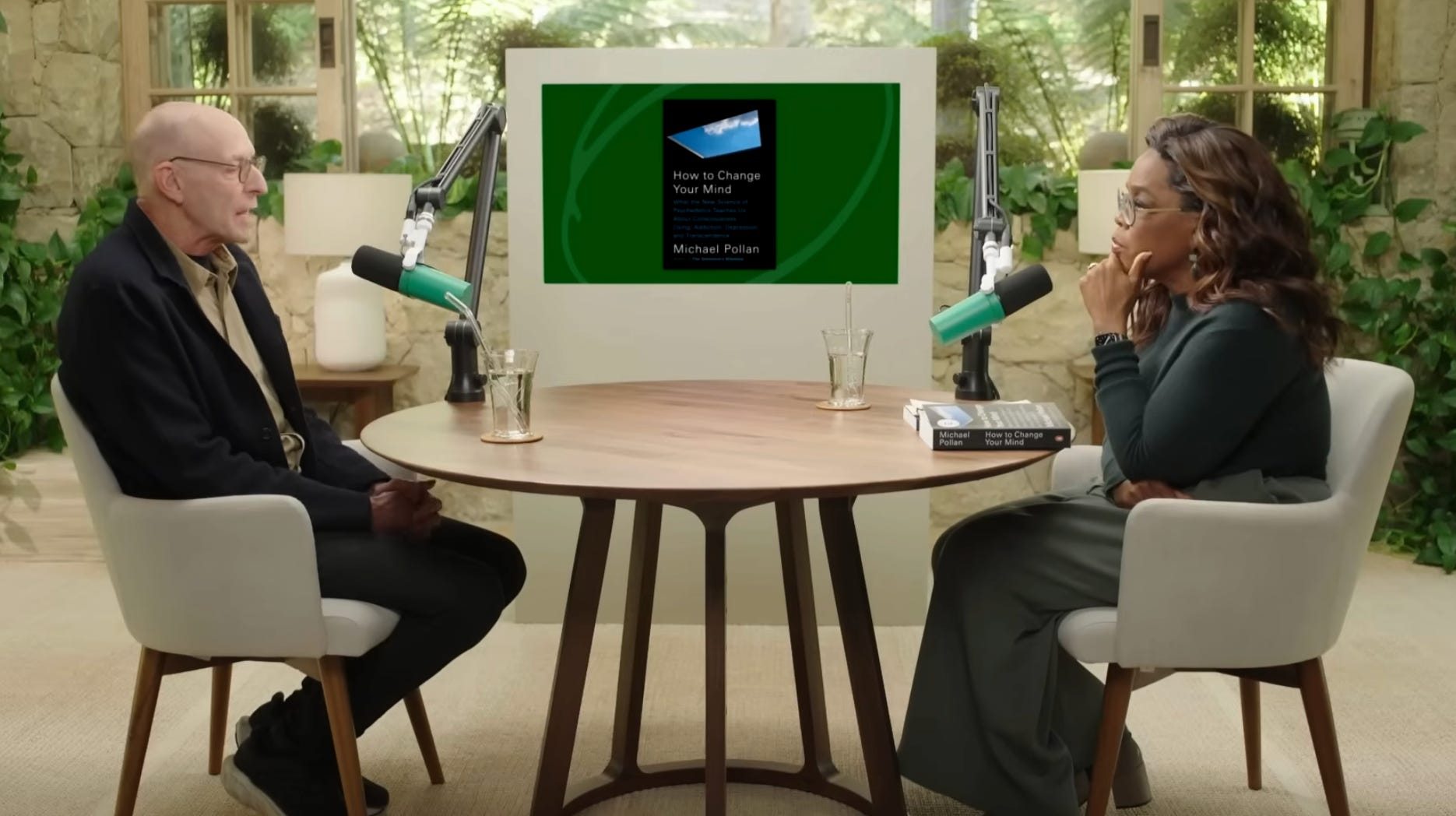
Psychedelic-assisted therapy (PAT) is an exciting and emerging approach in mental health that combines the use of psychedelic medicines with structured therapeutic support before, during, and after. Plant medicines have long histories in Indigenous ceremonial contexts, but they are now re-entering the medical mainstream with growing interest from researchers, clinicians, and policymakers, including the Trump administration. In PAT, a therapist or guide typically sits with the client during the peak experience and works with the client in preparation and integration sessions. It’s a dual process: the medicine can act as a catalyst for healing, insight, and increased neuroplasticity, and the therapeutic relationship and integration work help translate the insights into meaningful, lasting change. Among the most studied substances are psilocybin, MDMA, and ketamine. Psilocybin has been studied for depression, anxiety, and end-of-life distress; MDMA research for PTSD is ongoing and it has not yet received FDA approval; and ketamine is currently legal and widely available in clinics. A growing body of clinical research suggests that psychedelics may help some people who haven’t responded well to conventional treatments like antidepressants or talk therapy. See: Psychology Today: Psychedelic Assisted Psychotherapy.
Some helpful resources:
Psychology Today, Types of Therapy
https://www.psychologytoday.com/us/types-of-therapy
Octave, A Guide to Different Therapy Approaches and Modalities
https://www.findoctave.com/blog/modality/therapy-modalities
NAMI, Treatment and Approaches
https://www.nami.org/treatments-and-approaches/psychotherapy/
Headspace, 9 Different Types of Therapy
https://www.headspace.com/articles/different-types-of-therapy
UC Berkeley Center for the Science of Psychedelics: https://psychedelics.berkeley.edu/
The Guardian, EMDR
https://www.theguardian.com/science/2021/may/21/emdr-what-is-the-trauma-therapy-used-by-prince-harry